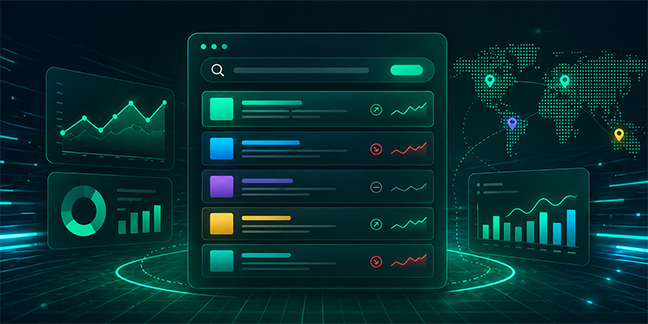
SERP Scraping API: How to Get Search Data That Holds Up
A practical guide to choosing and using a serp scraping api for reliable rankings, ads, snippets, local packs, and AI-ready search intelligence.



A serp scraping api is not just a tool that returns Google results in JSON. It is a decision layer for SEO teams, product teams, market analysts, and AI systems that need search data without browser noise, captcha interruptions, or location guesswork. The difference between a weak API and a reliable one shows up when rankings move by two positions, a local pack changes after lunch, or a competitor launches new ads in three cities.
Search result pages are unstable by design. They shift by device, location, language, login state, query intent, and the type of result Google decides to show. A manual check gives you one screenshot. A serp scraping api gives you repeatable evidence, if the provider controls collection quality instead of only selling request volume.
What a serp scraping api really does
A strong serp scraping api sends search queries to search engines, handles the collection environment, parses the results, and returns structured data. That data may include organic listings, paid ads, featured snippets, People Also Ask blocks, video results, news cards, shopping units, local packs, knowledge panels, related searches, and sometimes AI-style answer modules.
The API should also preserve the context behind each result. A ranking without the query, country, language, device, timestamp, and exact result type is incomplete. If your rank tracker says a page is position 3, but the page appears below a featured snippet, two ads, and a local pack, the business meaning is closer to position 8 on the visible screen.
The hidden cost of inaccurate SERP data
A SaaS company I worked with once believed its documentation pages were losing visibility. Their internal scraper showed a 19% decline in top-three rankings across technical keywords. The SEO team paused a content refresh and moved budget into link building. Two weeks later, the team found the scraper had stopped rendering mobile results correctly in several US states. The pages had not dropped. Google had started showing a code snippet block above the organic list, and the parser mislabeled it as an organic result.
The direct cost was not the API bill. It was three weeks of wrong decisions. A serp scraping api should reduce uncertainty, not create a cleaner-looking version of bad data.
What to evaluate before choosing an API
Price per request is easy to compare. Data quality is harder. A useful evaluation starts with five checks.
Result completeness: Does the API return all visible modules, or only ten blue links?
Geo precision: Can you request city-level, country-level, and language-specific SERPs without vague location simulation?
Device control: Does mobile data differ from desktop data in the response, or is the API simply changing a user-agent string?
Parsing transparency: Does the response separate organic results, ads, snippets, local results, and knowledge panels clearly?
Failure reporting: Does the API expose blocked requests, empty pages, retries, and parsing errors, or hide them behind a 200 response?
The last point matters more than most buyers expect. A silent failure is worse than a visible one. If a provider returns partial data without a warning, your dashboards will look stable while the underlying collection is broken.
Proxy Rotation is necessary, but not enough
Every serious serp scraping api uses Proxy Rotation. Search engines limit automated access, and rotating IPs helps distribute requests across regions and networks. Yet Proxy Rotation alone does not make SERP data reliable. Poor rotation can create inconsistent locations, trigger unusual result pages, or mix residential and datacenter signals in ways that distort rankings.
A better provider treats proxies as one part of a collection system. The request should align proxy location, browser fingerprint, language headers, device profile, and query cadence. If you ask for mobile SERPs in Toronto, the collection environment should behave like a mobile user in Toronto, not a desktop crawler routed through a random Canadian IP.
Talordata SERP API — No complex setup or manual parsing required. With a built-in global proxy pool and CAPTCHA-solving technology, your scraping process remains stable, free from interruptions and blocking issues. Simply call a single API endpoint to retrieve real-time search engine results and structured data in just 1–2 seconds. Start your free trial now >>
Structured SERP data beats screenshots
Screenshots help explain a result to a client. They do not scale. Structured SERP data lets you calculate share of voice, identify snippet ownership, detect ad pressure, monitor new competitors, and feed downstream AI workflows. For example, a content team can use a serp scraping api to pull the top results for 2,000 queries, cluster ranking URLs by intent, and identify where Google prefers comparison pages over product pages.
The useful unit is not only the URL. It is the relationship between the query, the result type, the wording Google displays, and the entities that appear around the result. A page ranking number one below a large AI answer may receive less traffic than a page ranking four on a cleaner SERP. APIs that expose SERP layout help you understand that difference.
How GEO changes the value of SERP scraping
Generative engine optimization makes SERP data more valuable, not less. AI answers still rely on sources, entities, citations, and repeated signals across the web. A serp scraping api helps you see which sources search engines surface before generative systems summarize them.
For GEO work, collect more than rankings. Track which domains appear in featured snippets, People Also Ask answers, knowledge panels, video carousels, and reference-style result blocks. If the same competitor appears across multiple SERP features, an AI system has more opportunities to learn that brand as a source. That pattern is more meaningful than a single organic position.
For AI visibility, the question is not “Where do I rank?” It is “Which sources does the search ecosystem keep repeating?”
A practical workflow for SEO and AI teams
Define query sets by intent: informational, commercial, local, branded, comparison, and troubleshooting.
Collect SERP data by market, language, and device at a fixed cadence.
Store raw HTML or rendered snapshots when compliance and storage policies allow it.
Parse structured fields into separate tables for organic results, ads, snippets, PAA, local packs, and video results.
Compare visibility by pixel depth, not only rank position.
Tag recurring domains, authors, brands, and entities.
Use alerts for layout changes, not only ranking changes.
This workflow catches shifts that classic rank tracking misses. If a keyword keeps the same organic top ten but gains four ads and an AI overview, traffic can fall while rankings appear unchanged. A serp scraping api with SERP feature coverage reveals the real cause.
Common mistakes that damage SERP datasets
The most common mistake is mixing markets in one dataset. A query like “best crm for startups” behaves differently in the US, UK, India, and Singapore. If your API requests do not lock location and language, the dataset becomes too noisy for serious decisions.
Another mistake is over-collecting low-value keywords. Pulling 500,000 daily SERPs sounds impressive until the team realizes no one uses 80% of them. A smaller query set with clear intent labels often produces better strategy than a giant feed of undifferentiated rankings.
Teams also ignore parser drift. Search engines change markup constantly. If your provider does not update parsers quickly, the API may misclassify ads as organic results or lose new SERP features. Run a small manual audit every month. Compare API output against live pages for your highest-value queries.
Build or buy?
Building your own scraper gives control, but control comes with maintenance. You need proxy infrastructure, browser automation, captcha handling, parser updates, queue management, retry logic, storage, monitoring, and legal review. That engineering burden makes sense for companies where SERP data is the product. For most SEO teams, a managed serp scraping api is cheaper than hiring engineers to chase search engine changes every week.
Buying does not remove responsibility. You still need validation. Test the API against known queries, compare multiple locations, check feature coverage, and inspect error logs. Ask whether the provider supports raw response access, historical archives, and clear service-level metrics.
The buying signal that matters
The best serp scraping api is not the one with the longest feature list. It is the one that makes uncertainty visible. It tells you when a request failed, when a result was partial, when a layout changed, and when a location could not be matched precisely. Clean JSON is useful. Honest metadata is what makes the data trustworthy.
If your search strategy depends on rankings, snippets, ads, local packs, and AI visibility, treat SERP collection as measurement infrastructure. Bad measurement produces confident mistakes. Good measurement gives you fewer surprises and better questions.