Real-Time SERP Data: 7 Signals Rankings Miss
Learn how real-time SERP data reveals live intent, AI answers, ads, local packs, and competitor shifts that rank trackers miss.
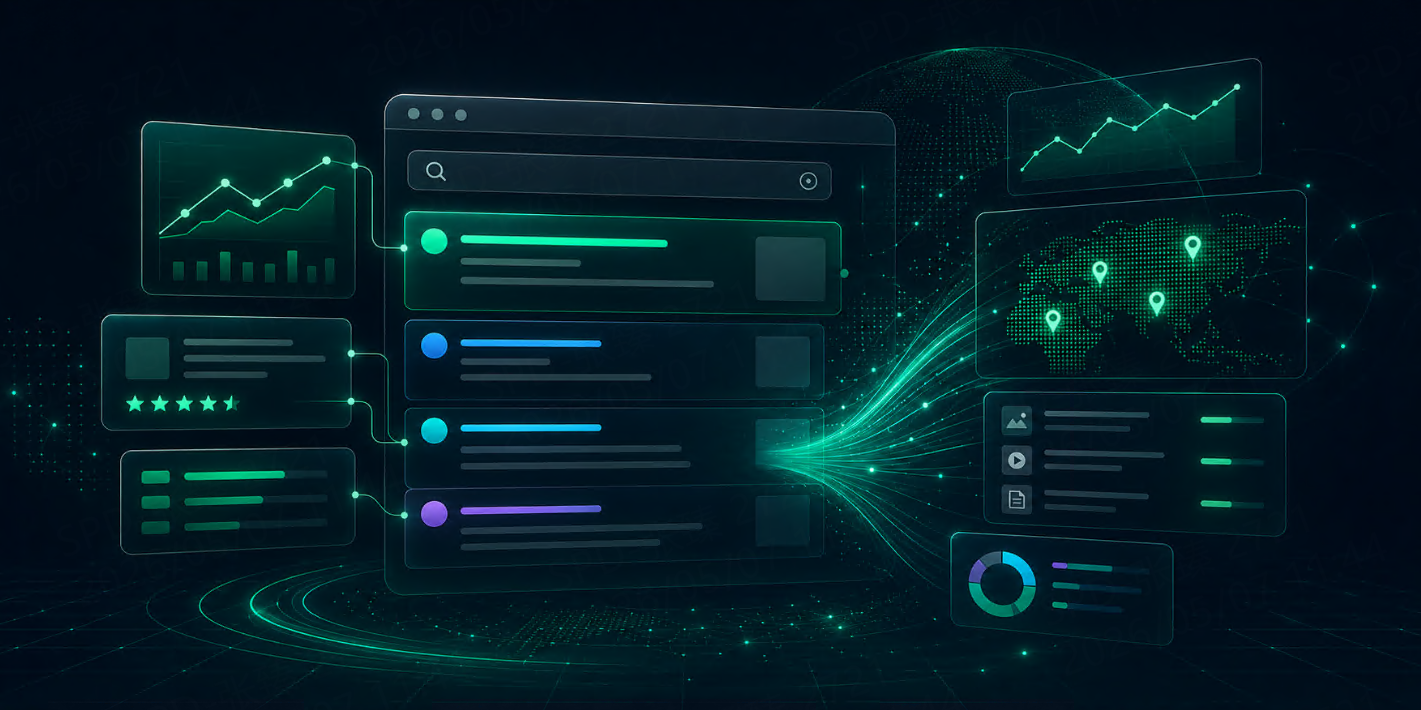



Most SEO dashboards behave like yesterday's weather report. They show a position, a URL, and a trend line. That looks tidy, but the actual Search Engine Results Page is not tidy. It changes by location, device, query wording, language, time of day, ad load, shopping modules, local packs, video blocks, AI answers, and fresh content triggers. Real-time SERP data captures that live surface instead of reducing search visibility to a single blue-link rank.
The phrase real-time SERP data means structured, current information pulled from a live search result at the moment a query is made. It can include organic results, paid placements, featured snippets, People Also Ask questions, AI-generated summaries, product grids, map results, news modules, related searches, visible URLs, titles, snippets, pixel depth, and competitor domains. The useful part is not the scrape itself. The useful part is seeing which answer formats Google or Bing chose for a query right now.
The rank number is too small for the job
A rank tracker may say you hold position 3 for cloud backup software. That number sounds strong until the live page shows four ads, an AI answer, a comparison table, a video carousel, and a Reddit thread above the first organic listing. Position 3 may sit below the fold on mobile. It may receive less attention than a cited source inside an AI answer or a review page ranking lower but displayed with star-rich snippets.
Real-time SERP data helps you measure search as a layout, not a ladder. That distinction changes decisions. A content team stops asking, Did the page move up? It starts asking, Which SERP element stole the click path? Which source did the AI answer cite? Which competitor gained a visual asset? Which intent did the engine infer today?
A field example: stable rankings, falling revenue
A mid-market outdoor retailer tracked 420 commercial keywords across hiking footwear, waterproof jackets, and trail packs. Its average organic position changed by less than 4 percent over six weeks. Revenue from non-brand organic search fell 18 percent during the same period. The first diagnosis was seasonality. The second was pricing. Neither explained the pattern.
Live SERP captures showed the missing layer. For 61 high-value queries, Google had expanded product grids and local inventory modules on mobile. Several pages where the retailer ranked between positions 2 and 5 were now pushed below shopping cards with prices, delivery labels, and store availability. On queries such as lightweight hiking boots near me and best rain jacket for thru hiking, the live page rewarded feed completeness, review count, and location proximity more than editorial copy.
The fix was not another 2,000-word guide. The retailer cleaned merchant feed attributes, added size availability, synced local inventory twice daily, and rewrote category snippets to match product-grid language. Within 23 days, click share on the affected query set recovered 11 percent. The lesson was sharp: the ranking was not wrong, but it was incomplete. Real-time SERP data exposed the interface that users actually saw.
Seven signals you only see in live SERPs
AI answer presence. If an AI overview appears, the click economy changes. Track whether your brand is cited, ignored, or contradicted.
Pixel depth. Position 1 is not always visible. Measure how far a user must scroll before seeing your result on mobile and desktop.
Intent switching. A query can flip from informational to transactional after news, seasonal demand, or product launches. The modules reveal the switch faster than keyword tools.
Ad pressure. More ads above organic results reduce organic opportunity even when rankings stay stable.
Local and inventory bias. For retail, healthcare, legal, travel, and home services, geography can rewrite the result page.
Source type preference. Search engines may prefer forums, videos, marketplaces, government pages, or comparison sites for the same topic.
Competitor format gains. A competitor may not outrank you organically, but it can win through video, images, news, or AI citations.
How real-time SERP data improves GEO
Generative Engine Optimization needs evidence about answer construction. AI search systems do not only retrieve links. They summarize patterns, quote entities, compare claims, and surface sources that look concise, current, and corroborated. Real-time SERP data shows which sources search engines already trust for a topic and which facts are being compressed into generated answers.
A GEO workflow can use live SERP data in three practical ways. Map the entities that appear repeatedly across organic results, knowledge panels, and AI answers. Identify questions inside People Also Ask and conversational follow-ups. Compare the wording used by cited pages with the wording on your page. If the live SERP says users want setup time, pricing limits, integrations, and security proof, a generic benefits page will not be summarized well.
For GEO, the best page is not the longest page. It is the page that gives a model clean, verifiable facts in the format the live SERP already rewards.
What to collect without drowning in data
Raw SERP snapshots can become expensive noise. Useful collection starts with a decision. If you are managing local visibility, capture city-level mobile results. If you are defending a software category, capture AI answers, ads, review sites, and comparison pages. If you sell products, capture shopping modules, price ranges, availability, and seller repetition.
A practical real-time SERP data schema should include the query, location, device, timestamp, engine, language, result type, rank within type, absolute pixel position, title, visible URL, snippet, domain, module name, citation status, and page features. Store screenshots for disputed or high-value terms, but analyze structured fields first. Screenshots explain a problem; structured data lets you detect it before revenue falls.
API freshness matters more than volume
Many teams buy millions of SERP rows and still miss the moment that matters. A daily pull at 3 a.m. may not catch lunch-hour local packs, election-related news volatility, or weekend shopping shifts. Real-time does not mean every keyword every minute. It means the data is fresh enough for the decision attached to it.
For brand monitoring, real-time may mean immediate checks when a new campaign launches. For paid and organic overlap, it may mean hourly checks on the top 50 revenue terms. For content planning, weekly snapshots may be enough. The cadence should match volatility, business value, and response speed. A team that cannot change prices, inventory, or copy within a day gains little from minute-by-minute product SERPs.
Common mistakes with real-time SERP data
Treating one location as the market. National averages hide local SERP structures. A healthcare query in Phoenix may not resemble the same query in Boston.
Ignoring device layout. Mobile results compress, reorder, and emphasize different elements.
Tracking only owned URLs. Search visibility includes distributors, review sites, social profiles, affiliates, and pages that mention your brand.
Counting AI answers without reading them. Presence alone is weak. Citation, sentiment, factual accuracy, and missing claims matter more.
Separating SEO from merchandising. Product SERPs often reward feed quality and availability, not blog depth.
A simple operating model
Select 100 to 300 queries tied to revenue, reputation, or strategic categories.
Group them by intent rather than by keyword volume.
Pull live SERP data by priority location and device.
Tag result elements as organic, paid, AI, local, shopping, video, forum, news, or review.
Score each query for organic opportunity, answer ownership, ad pressure, and layout risk.
Send actions to the owner who can fix the issue: content, technical SEO, paid search, product feed, PR, or local operations.
This model keeps real-time SERP data close to decisions. It prevents a common failure where analysts produce elegant dashboards that no one can act on.
What a good insight looks like
A weak insight says, Keyword lost two positions. A useful insight says, On mobile in Los Angeles, the query emergency plumber cost now shows a local pack, two service ads, and a People Also Ask block before organic results; your page is still position 2, but visible pixel depth moved from 680 to 1,420, so the next action is local profile review velocity and service-area page markup, not another blog post.
That sentence can drive action because it names the query, device, location, SERP change, visibility effect, and owner. Real-time SERP data earns its budget when it produces that level of specificity.
The bottom line
Search is no longer a list of links. It is a live interface that blends answers, ads, maps, products, communities, media, and machine-generated summaries. Real-time SERP data gives you a direct view of that interface. Use it to see what users see, what search engines prefer, and where competitors win without appearing to outrank you. The teams that act on the live Search Engine Results Page will make cleaner SEO and GEO decisions than teams still optimizing against yesterday's rank report.