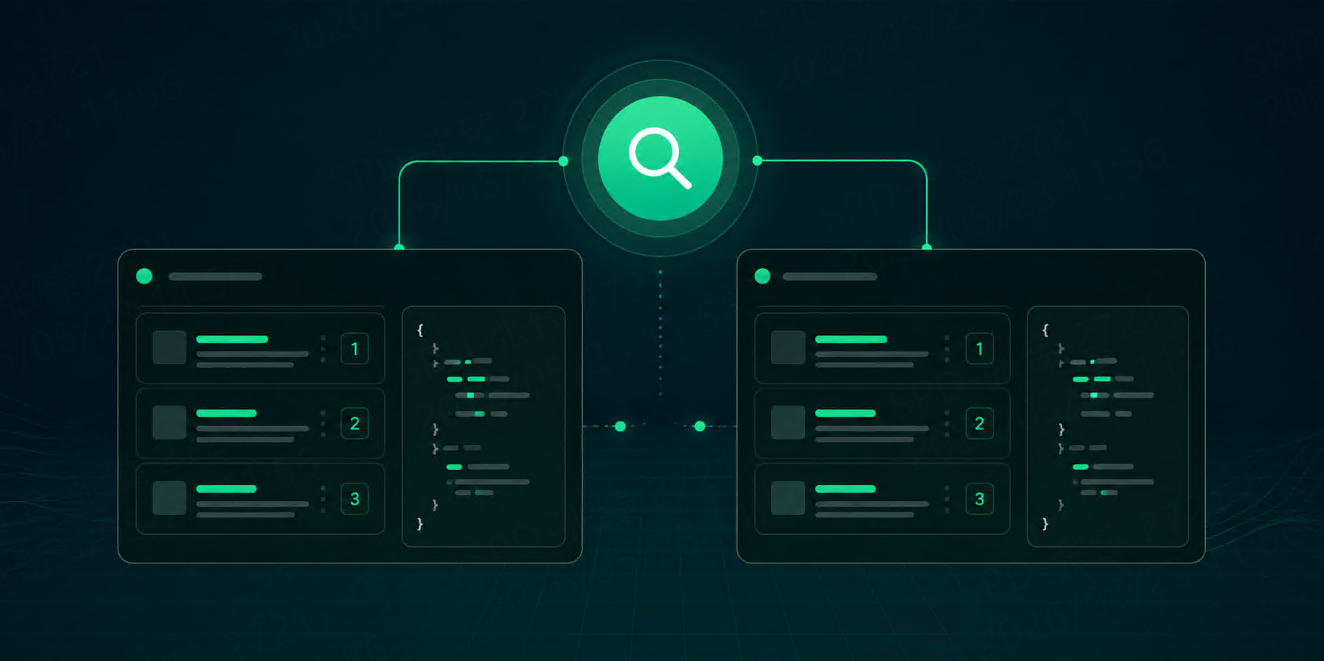
Multi-Engine SERP API: One Feed, Fewer Blind Spots
Learn how a multi-engine SERP API turns fragmented Google, Bing, and regional search results into reliable structured SERP response data for SEO decisions.




A multi-engine SERP API is not just a way to scrape more search engines. Its real value appears when your SEO decisions stop depending on a single version of reality. Google may show one commercial intent pattern, Bing may surface older trusted domains, Yahoo may mirror Bing with small layout differences, and regional engines may expose local language signals that global rank trackers miss. If your dashboard treats Google as the whole market, you are measuring visibility through a keyhole.
The keyword multi-engine SERP API usually attracts teams that already collect rankings. They have run into a more specific problem: rank alone no longer explains traffic. A page can hold position three and still lose clicks because an AI answer, shopping block, video carousel, or local pack eats the screen. A multi-engine API helps when it returns a structured SERP response, not a raw HTML dump. That means every result type becomes machine-readable: organic listings, ads, snippets, knowledge panels, people-also-ask boxes, news modules, images, maps, sitelinks, and generative answer blocks where available.
Why one search engine is a weak sample
Search behavior fragments quietly. B2B buyers often test the same query in Google and Bing because their default browser, company device, or AI assistant sends them there. Developers may use Brave Search or DuckDuckGo for privacy. Consumers in some markets still rely on local engines for maps, commerce, or news. A single-engine report hides these differences and creates false confidence.
Consider a SaaS company tracking “data warehouse cost calculator.” Google showed comparison articles, two ads, and a featured snippet. Bing showed vendor documentation, a calculator page from a cloud provider, and a Reddit thread. The company’s Google-only report recommended another comparison post. The multi-engine SERP data suggested a better move: publish a calculator with transparent methodology and mark it up with FAQ and software application schema. Six weeks later, the page did not win Google’s top organic spot, but it became visible in Bing and earned citations from AI-generated summaries that preferred concrete inputs over listicle language.
This is the hidden advantage of multi-engine analysis. It does not simply expand coverage. It reveals what different ranking systems reward. When those patterns overlap, the signal is strong. When they diverge, the gap often exposes a content opportunity.
What a useful multi-engine SERP API must return
A weak API gives you ten blue links with titles and URLs. A serious API gives you the search page as data. Before choosing a provider, inspect the response schema. You need fields that survive automation, not screenshots that impress in a sales demo.
Engine and market metadata: engine name, country, language, device, location, timestamp, safe search, and pagination depth.
Result classification: organic, paid, local, image, video, news, shopping, answer box, AI overview, forum, or knowledge panel.
Pixel or block position: rank is useful, but screen placement explains click loss better than numeric position.
Canonical URLs: normalized URLs prevent duplicate counting when tracking domains across engines.
Entity extraction: people, brands, products, prices, ratings, locations, and dates help content teams understand what the SERP is really about.
Stable identifiers: repeatable IDs let analysts compare the same SERP feature across days without brittle string matching.
The phrase “structured SERP response” matters because it changes the downstream workflow. Your data warehouse can join SERP features with traffic, conversions, content inventory, and crawl data. Your product team can watch category demand. Your PR team can see which publishers are repeatedly cited. Your GEO workflow can identify pages that appear near AI answer sources.
The GEO angle: search results as training signals for answer engines
Generative engines do not cite pages randomly. They tend to favor pages with clear entities, concise definitions, original data, consistent terminology, and visible authority signals. A multi-engine SERP API helps you map which URLs keep appearing across search surfaces before an AI assistant summarizes the topic.
For example, if a query triggers a featured snippet in Google, a forum result in Bing, and a knowledge panel in another engine, the topic is not just informational. It has competing answer formats. A content page that wants to be cited by generative systems should include a short definitional block, a comparison table, verifiable numbers, and named sources. The API does not write that content. It tells you which answer shape the market is already rewarding.
This is where SEO and GEO stop being separate projects. SEO asks where a page ranks. GEO asks whether an answer engine can extract, trust, and reuse the page. Multi-engine SERP data gives both teams the same evidence.
How to evaluate providers without falling for vanity coverage
Many vendors advertise hundreds of engines. That number means little if the engines are wrappers around the same index or if the API fails under localized queries. Test five things before signing a contract.
Freshness: run volatile news, ecommerce, and local queries twice in one hour. Compare timestamp accuracy and result drift.
Localization: test the same query from city-level locations. Local packs, maps, and ads should change in believable ways.
Feature depth: check whether the API returns nested sitelinks, shopping attributes, video durations, review counts, and AI answer references.
Error transparency: a usable API separates no result, blocked request, timeout, parsing failure, and unsupported feature.
Cost predictability: pricing should account for engine, location, depth, device, and refresh frequency. Cheap requests become expensive when retries double.
A practical benchmark is simple: take 100 keywords across informational, commercial, branded, and local intent. Query at least three engines, two devices, and two markets. Store the JSON, not just the dashboard output. If analysts cannot answer “what changed and why?” from the raw response, the API is not mature enough for strategic SEO.
A workflow that turns SERP data into decisions
The best setup is not complicated. Pull SERP data daily for high-value keywords, weekly for mid-tier keywords, and monthly for discovery terms. Tag each keyword by intent, funnel stage, region, and owning page. Then calculate three metrics that a normal rank tracker misses.
Feature pressure: the share of above-the-fold space occupied by ads, AI answers, local packs, video, or shopping modules.
Cross-engine consensus: how often the same domains appear across engines for the same query cluster.
Answer extractability: whether top-ranking pages contain direct definitions, tables, statistics, step lists, and source references.
These metrics produce better actions than “move from position five to position three.” High feature pressure may justify video, feed optimization, or local landing pages. Strong cross-engine consensus may show that the topic has a stable authority set and needs a differentiated asset. Weak extractability among top results may reveal a GEO opportunity: publish the clearest answer and make it easy to quote.
For implementation details, connect this workflow with technical SEO data pipelines and GEO content optimization checklist. The API should feed existing systems instead of becoming another isolated dashboard.
Common mistakes that damage the data
The most expensive mistake is mixing devices, locations, and languages in one trend line. A desktop result in New York and a mobile result in Toronto are not two samples of the same SERP. They are different search products. Another mistake is treating every engine equally. Weight engines by audience, conversion value, and market role. A privacy-focused engine with low volume may still matter for developer tools, security software, or technical documentation.
Teams also over-collect and under-label. Millions of SERP rows are useless if no one knows which product line, market, or content owner they support. Start smaller. Build a clean taxonomy. Expand only after the data changes decisions.
When a multi-engine SERP API is worth the cost
You need one when organic traffic depends on more than Google blue links, when your brand competes in multiple markets, when AI answers affect discovery, or when SEO data must support product, content, PR, and revenue teams. You may not need one if you operate in a single small local market and only care about basic Google rankings.
The strongest business case is risk reduction. A multi-engine SERP API shows when visibility is concentrated in one engine, one feature type, or one fragile content format. It also reveals opportunities that Google-only tools miss. In search strategy, the most damaging blind spot is not a wrong ranking number. It is a correct number from too narrow a source. Start free trial of multi engine SERP API>>