Dedicated vs Shared Proxies: Which One Should You Buy?
This guide breaks down the practical differences between dedicated and shared proxies, including real use cases in web scraping, account management, and large-scale monitoring.
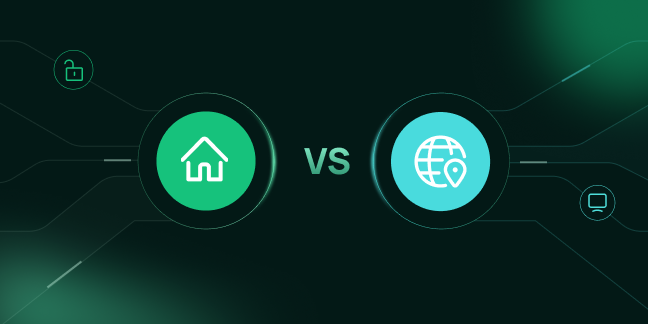



Choosing between dedicated and shared proxies is rarely just a pricing decision. The proxy type you choose directly affects request stability, session persistence, scalability, and long-term operational costs.
Dedicated proxies give you exclusive control over an IP, which makes them better suited for persistent sessions and account-based workflows. Shared proxies, on the other hand, are often more cost-efficient for large-scale crawling and broad data collection. The right choice depends on how your team actually uses proxies day to day.
This guide breaks down the practical differences between dedicated and shared proxies, including real use cases in web scraping, account management, and large-scale monitoring.
What Are Dedicated Proxies?
Dedicated proxies are IPs used by a single customer at a time. Because the traffic history belongs only to your workflow, the IP reputation is easier to manage and session behavior is more predictable.
In practice, this means every request tied to that proxy reflects only your browsing, scraping, or automation patterns.
How dedicated proxies work
With dedicated proxies, one IP address is assigned exclusively to your tasks. No other user shares the same reputation, cookies, or request history.
This setup provides:
consistent IP identity
cleaner request history
more stable session continuity
fewer unexpected reputation changes
For workflows that rely on stable identities, this predictability matters.
Main advantages of dedicated proxies
The biggest benefit is control.
Because the IP is not shared, dedicated proxies usually perform better for:
long browsing sessions
login persistence
browser automation
multi-step page interactions
account isolation
They are also easier to troubleshoot because traffic patterns are entirely your own.
Common use cases for dedicated proxies
Dedicated proxies are a strong fit for workflows where identity continuity matters.
Typical examples include:
account management
anti-detect browser sessions
seller dashboards
loyalty or member pricing checks
persistent marketplace sessions
automation flows requiring login continuity
If a task depends on maintaining the same session for hours or days, dedicated proxies are usually the safer choice.
What Are Shared Proxies?
Shared proxies are IPs used by multiple customers. Instead of exclusive ownership, the provider distributes traffic across a larger pool of users and requests.
This makes them more cost-efficient and easier to scale for high-volume workloads.
How shared proxies work
With shared proxies, multiple users may rotate through the same IP pool over time.
This creates:
lower per-user costs
better resource utilization
wider IP availability
easier horizontal scaling
For many data teams, this model is ideal because broad coverage matters more than persistent identity.
Benefits of shared proxies
The strongest advantage is scalability.
Shared proxies work well when your priority is:
covering many URLs
distributing requests widely
reducing cost per request
scaling category-level monitoring
handling short-lived sessions
They are especially effective for workflows where each request is independent.
Common use cases for shared proxies
Shared proxies are commonly used for:
web crawling
competitor monitoring
category discovery
price intelligence
ad verification at scale
public data extraction
For high-volume discovery tasks, shared pools are often the more efficient option.
Dedicated vs Shared Proxies: 7 Key Differences
Although both proxy types solve similar access problems, the workflow impact is very different.
Cost and budget efficiency
Shared proxies are usually the more budget-friendly option because infrastructure costs are distributed across multiple users.
Dedicated proxies cost more because the IP resource is reserved exclusively for your use.
For teams managing broad data coverage on limited budgets, shared pools often deliver better short-term efficiency.
IP reputation control
Dedicated proxies offer much stronger reputation control.
Since only your requests shape the traffic history, you avoid the unpredictability that sometimes comes with shared environments.
Shared proxies may inherit traffic patterns from other users, which can occasionally affect trust levels.
Stability and session persistence
Dedicated proxies are generally stronger for:
long browser sessions
login-required workflows
account dashboards
multi-page navigation
persistent cart testing
Shared proxies are better suited for short, stateless requests.
Scalability for large requests
This is where shared proxies often perform better.
For workflows involving:
thousands of category pages
marketplace-wide discovery
SERP collection
broad public page monitoring
shared pools make scaling easier and cheaper.
Login and account safety
For account-based workflows, dedicated proxies are usually safer because they preserve a more stable IP identity.
This reduces session interruptions and lowers the risk of unusual login behavior.
Success rate in web scraping
Neither type is universally better.
The right choice depends on the workflow:
shared for high-volume public scraping
dedicated for session-based or personalized scraping
Geo-targeting precision
Geo precision depends more on the provider’s IP pool quality than whether the IP is shared or dedicated.
That said, dedicated proxies can make long-running geo tests easier to standardize.
Which Proxy Type Is Better for Web Scraping?
The answer depends on what your scraper is doing.
When shared proxies perform better
Shared proxies are usually the better fit for:
large-scale crawling
category discovery
product URL expansion
broad competitor price checks
localized SERP discovery
public listing extraction
These workflows benefit from wide IP diversity and lower per-request costs.
When dedicated proxies work better
Dedicated proxies are often better when scraping includes:
login-required pages
personalized offers
shopping cart flows
member-only discounts
seller account dashboards
long multi-step extraction flows
The stable session identity helps reduce unexpected interruptions.
Best hybrid setup for data teams
Many mature teams combine both.
A common workflow is:
shared proxies for discovery
dedicated proxies for stateful extraction
This hybrid model improves both cost efficiency and data quality.
Which Is Better for Multi-Account Management?
Multi-account workflows place more weight on IP consistency than raw scale.
Why dedicated proxies are better for account isolation
Dedicated proxies create a stable IP identity for each browser or account profile.
This helps with:
account separation
session persistence
lower linking risk
consistent device-IP pairing
repeat access patterns
For long-term account operations, this consistency often outweighs cost differences.
When shared proxies still make sense
Shared proxies can still work for:
low-risk short sessions
temporary public tasks
broad research requests
one-time monitoring jobs
The key question is whether the workflow needs identity persistence.
Dedicated residential vs static ISP
For long-running tasks, static ISP-style dedicated proxies are often preferred because they combine:
ISP-level stability
long uptime
cleaner reputation
stronger browser persistence
This makes them practical for browser automation and dashboard access.
Cost vs Performance: Which Offers Better ROI?
The cheapest proxy is not always the lowest-cost solution over time.
Shared proxies for budget-conscious teams
For broad crawling and large public datasets, shared proxies usually offer better ROI because they reduce cost per successful request.
Dedicated proxies for high-value workflows
For high-value tasks, the higher price can still be justified.
Examples include:
premium account monitoring
seller intelligence
pricing dashboards
personalized content extraction
Hidden costs of choosing the wrong type
The wrong proxy choice can create hidden costs such as:
retries
failed sessions
broken logins
inaccurate data
duplicate requests
unstable monitoring pipelines
These costs often exceed the difference in proxy pricing.
Common Mistakes to Avoid
A common mistake is choosing based only on upfront price.
Another is using shared proxies for workflows that require long login persistence.
Teams also sometimes overpay for dedicated proxies in simple crawling tasks where shared rotation would work just as well.
The better approach is to match proxy type to workflow state:
stateless → shared
stateful → dedicated
Final Thoughts
Dedicated and shared proxies solve different operational problems.
Choose dedicated proxies when session continuity, account safety, and IP control matter most.
Choose shared proxies when your priority is cost-efficient scale and broad public data coverage.
For many real-world teams, the best setup is not one or the other, but a hybrid workflow that uses each where it performs best.
That approach usually delivers better long-term ROI, stronger data quality, and fewer workflow bottlenecks.
FAQ
Are dedicated proxies better than shared proxies?
For persistent sessions and account-based workflows, dedicated proxies are often the better fit.
Are shared proxies good for web scraping?
Yes, especially for large-scale public scraping and URL discovery.
Which is cheaper, dedicated or shared proxies?
Shared proxies are generally more affordable.
Do dedicated proxies improve session stability?
Yes. Exclusive IP access makes long-running sessions more predictable.
Can I use both dedicated and shared proxies together?
Yes. Many data teams use shared proxies for discovery and dedicated proxies for persistent extraction workflows.