Why Teams Collect DuckDuckGo Search Data in 2026
Learn why teams collect DuckDuckGo search data in 2026 and how they use it for SEO monitoring, AI answer visibility, competitor research, reporting, and automation.
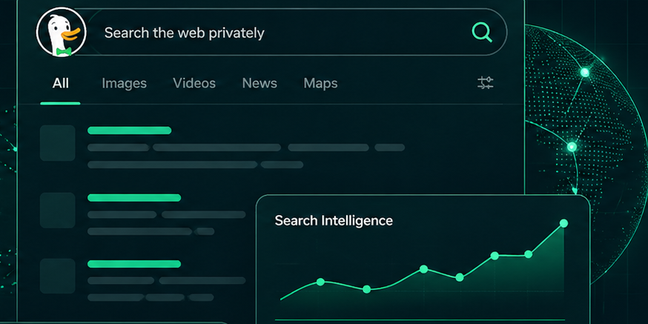



DuckDuckGo search data still matters in 2026 because it shows a search environment that is not the same as Google.
That is the core reason.
DuckDuckGo positions itself around privacy and says it does not track searches or browsing history. Its result pages also include more than standard organic links. DuckDuckGo now offers optional AI-assisted answers that cite sources directly, and many result pages include Instant Answers powered by a wide range of sources. That changes what users see and what teams may want to monitor.
For teams working in SEO, AI search, content visibility, competitor research, or reporting, that makes DuckDuckGo worth tracking as its own search surface.
Why DuckDuckGo is worth monitoring
Most teams do not collect DuckDuckGo data because of search volume alone.
They collect it because it gives them a second search environment to compare against. A page that performs well on Google does not always look the same on DuckDuckGo. Result composition, answer surfaces, and source visibility can all shift the picture.
That matters when teams want to answer questions like:
Are we visible outside Google?
Are competitors more visible on DuckDuckGo?
Are answer-style result surfaces changing what users see first?
Are our pages showing up as cited sources?
Those are practical visibility questions, not abstract ones.
DuckDuckGo is not just a list of blue links anymore
This is one of the biggest reasons teams still collect DuckDuckGo search data.
DuckDuckGo’s help pages explain that AI-assisted answers are an optional feature that can generate brief answers from web content and cite one or two direct sources. DuckDuckGo also says many search result pages include Instant Answers, which are generated from more than 100 sources.
That means the search page may include:
standard organic results
answer-style modules
cited sources
instant results
other visible search elements
If a team only tracks rankings and ignores those layers, it may miss how visibility actually works on DuckDuckGo.
What teams usually collect
Most teams start with a small, practical dataset.
That usually includes:
title
URL
snippet
ranking
query
timestamp
That is enough for reporting, monitoring, and comparison.
Some teams also collect:
answer-style result surfaces
source links
Instant Answers
visible result types
context tied to device or location
The right dataset depends on the workflow. A reporting team may only need titles and rankings. An AI-monitoring team may care much more about answer modules and cited sources.
1. SEO monitoring outside Google
This is one of the clearest use cases.
SEO teams collect DuckDuckGo search data because they want a broader view of search visibility. The goal is not to replace Google tracking. The goal is to see how content appears in another search environment.
This is useful for:
ranking checks
snippet comparison
visibility tracking
comparing results across engines
spotting search-performance blind spots
A page may rank similarly across engines. It may also look very different. That difference is exactly why the data is useful.
2. AI answer and source visibility monitoring
This use case matters more in 2026 than it did a few years ago.
DuckDuckGo says its AI-assisted answers are optional and that they cite sources directly. It also says DuckAssistBot crawls pages in real time for those AI-assisted answers. That makes DuckDuckGo useful for teams that want to monitor not just rankings, but source visibility inside answer-driven result surfaces.
Teams use this data to track:
whether their pages appear as cited sources
which pages are cited
whether answer visibility changes over time
whether answer modules reduce the visibility of standard results
For AI-era search monitoring, this is a real use case, not a niche one.
3. Competitor and category research
DuckDuckGo search data is also useful for competitor research.
Teams can use it to see which domains appear often, which sites dominate a topic, and whether the competitive picture looks different from other engines. This is useful in crowded categories where visibility is shared across many publishers, brands, or merchants.
The goal is usually simple:
identify who appears most often
compare repeated domain presence
see how result pages are structured
understand how alternative search environments present the market
That gives teams another way to evaluate competitive visibility.
4. Search grounding and AI retrieval
Some teams collect DuckDuckGo data because they want another search source for AI retrieval.
That can be useful in workflows where the system needs:
external search context
titles and snippets for retrieval
source-linked answers
a broader search picture than one engine alone
This does not mean every RAG workflow needs DuckDuckGo. It means DuckDuckGo can be useful when teams want another source for grounding, comparison, or fallback retrieval.
In those workflows, the useful fields are usually the simple ones:
title
URL
snippet
visible answer or source elements
5. Internal reporting and recurring monitoring
This is one of the most practical use cases.
Once a team decides DuckDuckGo data matters, it usually needs a repeatable way to collect it. That is where search APIs and structured collection become useful.
Common reporting uses include:
weekly visibility snapshots
competitor summaries
answer-surface tracking
trend dashboards
recurring search-result audits
Manual checks work for one-off tasks. They do not work well for recurring reporting.
Quick summary table
Use Case | What Teams Track | Why It Matters |
SEO monitoring | rankings, snippets, visibility | shows search performance outside Google |
AI answer monitoring | cited sources, answer surfaces | tracks source visibility in answer-style results |
Competitor research | domains, repeated presence, result mix | shows who owns visible search space |
AI retrieval | titles, URLs, snippets, sources | supports grounding and comparison workflows |
Internal reporting | recurring result snapshots, trends | makes monitoring repeatable |
What makes DuckDuckGo data different
Three things stand out.
1. Privacy-first positioning
DuckDuckGo explicitly says it does not track searches or browsing history. That gives teams a distinct search environment to watch.
2. AI-assisted answers with cited sources
DuckDuckGo’s answer layers are not just summaries. They also link directly to sources. That makes source visibility worth monitoring.
3. Instant Answers and mixed result surfaces
DuckDuckGo says many result pages include Instant Answers from over 100 sources. That means visibility is not only about blue-link rankings.
Where Talordata fits
For teams that want to collect DuckDuckGo search data on a recurring basis, the main challenge is not understanding the use case. The challenge is collecting the data in a structured way without turning the workflow into a maintenance project.
That is where Talordata can fit naturally.
It is more relevant when the team wants structured search data for SEO monitoring, AI workflows, reporting, or competitor tracking, while reducing the usual friction that comes with geo restrictions, CAPTCHA interruptions, and recurring collection work.
Final thoughts
Teams collect DuckDuckGo search data in 2026 because it gives them a useful search view outside the default Google workflow.
That matters more now because DuckDuckGo result pages include AI-assisted answers, cited sources, and Instant Answers, not just standard organic results.
The real value is not in one result page.
It is in structured, repeatable collection that helps teams track visibility, compare search environments, monitor sources, and build reporting or AI workflows on top of that data.
FAQ
Why do teams collect DuckDuckGo search data in 2026?
They collect it because DuckDuckGo shows a different search environment from Google, including privacy-first positioning, AI-assisted answers, and Instant Answers.
Is DuckDuckGo search data useful for SEO?
Yes. It helps SEO teams track rankings, compare snippets, and see how content appears outside Google.
Can DuckDuckGo search data be used for AI search and grounding?
Yes. Teams can use titles, URLs, snippets, and visible answer surfaces as input for retrieval, grounding, and source comparison workflows.
What can teams learn from DuckDuckGo search results?
They can learn which pages rank, which domains appear often, how answer-style modules affect visibility, and whether their pages are cited as sources.
Why not just check DuckDuckGo manually?
Manual checks work for one-off tasks. They do not scale well for repeated monitoring, reporting, or automation.
What should teams compare before collecting DuckDuckGo search data at scale?
They should compare output structure, search element coverage, workflow fit, and repeated-use cost.