5 Best Google Shopping Scrapers in 2026
This article compares five Google Shopping scrapers and SERP APIs for ecommerce teams. It explains how teams can collect product titles, prices, sellers, ratings, reviews, product links, and ranking positions, then use that data for price monitoring, seller comparison, product visibility tracking, market research, and AI-powered ecommerce workflows.
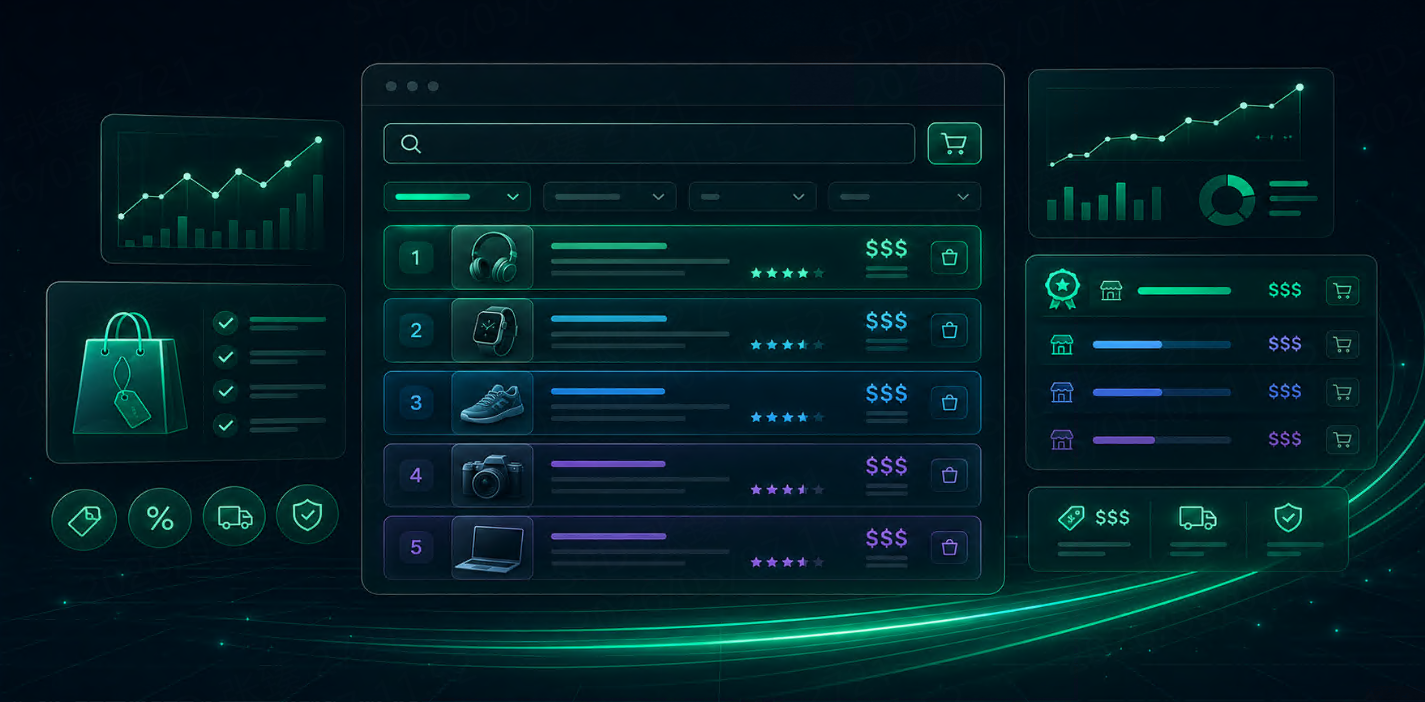



Google Shopping scrapers help ecommerce teams collect product data from Google Shopping results in a structured way.
For many teams, this data is useful for price monitoring, seller comparison, product visibility tracking, market research, and ecommerce SEO. Instead of checking product listings manually, teams can use a scraper or SERP API to collect fields such as product titles, prices, sellers, ratings, reviews, images, links, and ranking positions.
The best Google Shopping scraper is not simply the tool with the most features. It is the tool that fits your workflow: recurring price tracking, product visibility analysis, seller monitoring, AI data workflows, or enterprise ecommerce intelligence.
Below are five Google Shopping scrapers and SERP APIs worth comparing in 2026.
What Is a Google Shopping Scraper?
A Google Shopping scraper is a tool that collects product and search-result data from Google Shopping.
Depending on the provider, it can collect data such as:
product title
price
seller
product link
product image
rating
review count
delivery or shipping information
ranking position
product ID or token
product offers
For recurring business workflows, a SERP API is often easier to work with than manual checks because it returns structured data that can be stored, compared, and connected to dashboards, pricing systems, or internal tools.
What Should Teams Compare?
Before choosing a Google Shopping scraper, teams should compare a few practical points.
Factor | Why It Matters |
Data coverage | Determines whether you can collect listings, prices, sellers, reviews, offers, and product details |
Output format | Clean JSON or HTML output makes integration easier |
Location support | Shopping results can vary by market and region |
Update frequency | Price and seller data can change often |
Workflow fit | Pricing, SEO, data, and AI teams need different fields |
Cost at scale | Recurring monitoring can become expensive if pricing does not match usage |
The right choice depends on the question your team wants to answer.
If the goal is price monitoring, seller and offer data matter most. If the goal is ecommerce SEO, ranking position and product visibility matter more. If the goal is AI or data enrichment, clean structured output becomes the priority.
1. Talordata SERP API
Best for: recurring Google Shopping data workflows across regions.
Talordata SERP API is a good fit for teams that need structured search result data across Google and other major search engines. Its product page highlights real-time search data, geo targeting, structured output, and use cases such as ecommerce intelligence, SEO rank monitoring, competitor monitoring, and AI search workflows.
For Google Shopping workflows, Talordata can support:
product visibility tracking
price monitoring
seller comparison
ecommerce competitor monitoring
structured JSON or HTML output
recurring data collection across markets
Talordata is most useful when the team wants Google Shopping data as part of a broader SERP API workflow, not just a one-time product lookup.
Watch-out: If a team only needs a small one-time product check, an API workflow may be more than necessary. Get free trial now -1000 requests!
2. Bright Data Google Shopping API
Best for: enterprise ecommerce intelligence and large-scale product data collection.
Bright Data’s Google Shopping API is positioned for collecting product details, prices, seller information, and customer reviews from global locations.
This makes it suitable for teams that need broad ecommerce data coverage, especially when product, seller, review, and market visibility data need to be collected regularly.
Bright Data is strong for:
product details
price monitoring
seller information
customer reviews
global collection needs
enterprise data workflows
Watch-out: It may be more than a small team needs if the workflow only requires lightweight shopping result tracking.
3. SerpApi Google Shopping API
Best for: developers who need a mature Google Shopping API with detailed result fields.
SerpApi provides a dedicated Google Shopping API endpoint using engine=google_shopping. Its documentation shows support for fields such as position, title, product ID, product link, source, price, delivery, rating, reviews, snippet, thumbnail, tags, and badges.
SerpApi is a good choice when developers want clear documentation and predictable shopping result fields.
It is useful for:
product visibility tools
price trackers
Google Shopping result integrations
structured product search workflows
developer-led ecommerce data projects
Watch-out: Teams should compare plan limits and cost against expected request volume before using it for high-frequency monitoring.
4. SearchAPI Google Shopping API
Best for: seller comparison and offer-level ecommerce data.
SearchAPI focuses on real-time product information, price comparison across stores, ratings, reviews, and merchant data. Its Google Product Offers API can retrieve merchant information, shipping details, prices, promotions, and purchase links in JSON format.
This makes SearchAPI useful for teams that care about more than product ranking. It can help compare offers, merchants, shipping details, and total purchase context.
SearchAPI is useful for:
seller comparison
offer monitoring
price and shipping analysis
merchant-level research
ecommerce pricing workflows
Watch-out: If your team only needs basic Google Shopping visibility, offer-level data may be more detailed than necessary.
5. Oxylabs Google Shopping Scraper
Best for: technical teams that need both search-level and product-level Google Shopping data.
Oxylabs documents a Google Shopping workflow with google_shopping_search for search results and google_shopping_product for detailed product information. The search source returns product listings, pricing, ratings, reviews, and product tokens, while the product source can retrieve details such as title, description, pricing, sellers, related items, reviews, specifications, and variants.
This structure is useful when a team needs to move from search result listings into deeper product data.
Oxylabs is useful for:
technical data pipelines
product-level ecommerce data
pricing and review analysis
product detail enrichment
structured product workflows
Watch-out: The two-step product token workflow may require more technical setup than a simple search-results API.
Quick Comparison Table
Tool | Best For | Main Strength |
Talordata SERP API | recurring SERP and ecommerce workflows | structured multi-engine search data |
Bright Data | enterprise ecommerce intelligence | broad product, price, seller, and review data |
SerpApi | developer integrations | detailed Google Shopping result fields |
SearchAPI | seller and offer comparison | merchant, shipping, offer, and price data |
Oxylabs | technical product data pipelines | search-level and product-detail workflow |
Which One Should You Choose?
Choose based on workflow, not brand name.
For ecommerce pricing teams, seller, price, shipping, and offer fields matter most. SearchAPI, Bright Data, Oxylabs, and Talordata are worth comparing.
For SEO and product visibility teams, ranking position, product title, source, and location-based visibility are more important. Talordata, SerpApi, and Bright Data are good options to compare.
For data engineering teams, documentation, schema stability, pagination, product tokens, and output structure matter most. SerpApi, Oxylabs, and SearchAPI are strong candidates.
For AI and ecommerce data workflows, the priority is clean structured product data that can be refreshed regularly and used in downstream systems. Talordata, Bright Data, and SearchAPI fit this use case well.
Final Thoughts
Google Shopping data can help ecommerce teams track prices, compare sellers, monitor product visibility, and understand market competition.
The best Google Shopping scraper depends on the workflow.
If your team needs recurring search-result data, a SERP API is usually the most practical choice. If you need deeper product information, choose a provider that supports product detail or offer-level data.
Start with the fields your team actually needs. Then compare tools by data coverage, output structure, location support, update frequency, and cost at scale.
FAQ
What is a Google Shopping scraper?
A Google Shopping scraper is a tool that collects product and search-result data from Google Shopping, such as titles, prices, sellers, ratings, reviews, links, and ranking positions.
What is the best Google Shopping scraper in 2026?
There is no single best option for every team. Talordata, Bright Data, SerpApi, SearchAPI, and Oxylabs are all worth comparing depending on your workflow.
What data can Google Shopping scrapers collect?
They can collect product titles, prices, sellers, ratings, review counts, product links, images, ranking positions, delivery details, and offer information depending on the provider.
Is a SERP API better than manual Google Shopping checks?
For recurring workflows, yes. A SERP API is more consistent and easier to connect to dashboards, reports, and internal systems.
Can Google Shopping data support AI workflows?
Yes. Structured Google Shopping data can support product matching, price comparison, catalog enrichment, market research, and ecommerce AI workflows.